Subscribe to Email Alert



AMA House of Delegates
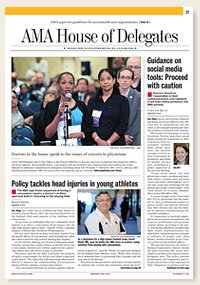
AMA meeting: Proceed with caution on social media tools
■ Doctors should be responsible in their communications and regularly track their online presence, the AMA advises.
By Carolyne Krupa — Posted Nov. 22, 2010
- INTERIM MEETING 2010
- » Our coverage
- » Print special section
- » AMA official proceedings
- » Meeting notes: Other actions
- » Related content
San Diego -- Social networking websites and blogs can be an effective and efficient way to communicate, but the AMA is advising physicians and medical students to proceed with caution.
Physicians writing blogs or using Facebook, Twitter and other social media should be responsible in their communications, routinely monitor their online presence, use security settings to limit access to personal information and abide by patient privacy laws, according to a policy approved at the Interim Meeting.
"Using social media can help physicians create a professional presence online, express their personal views and foster relationships, but it can also create new challenges for the patient-physician relationship," said AMA Board of Trustees Member Mary Anne McCaffree, MD.
A recent Google study found that 86% of U.S. physicians use the Internet in their professional careers to gather health and medical information. Most doctors also use the Internet for personal communications beyond the workplace.
It's important to maintain appropriate doctor-patient boundaries and separate professional and personal content online, according to the policy. Physicians should be mindful that their online communications are searchable, long-lasting and available to millions of people, said Julia Halsey, student member of the Council on Ethical and Judicial Affairs.
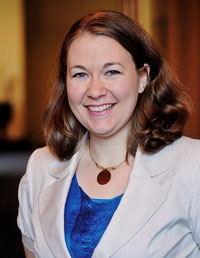
Julia Halsey, student member of the Council on Ethical and Judicial Affairs, cautions physicians that online communication is permanent and searchable. Photo by Ted Grudzinski / AMA
Though the Internet can foster a feeling of anonymity, doctors should not post anything that could have negative professional repercussions, delegates said. The policy advises professional self-regulation and reminds physicians to be cognizant of their obligations to patients and not do anything to jeopardize patient privacy or confidentiality.
On social networking websites, physicians should use privacy settings to block their information from public view, but they need to recognize that those settings may not completely or permanently prevent outside access, the policy says.
Careful communication
Physicians are cautioned against having nonclinical communications with patients, because doctors may see something about a patient online that could have implications for their medical care. In the report that led to the policy, CEJA members gave the example of a photo posted online of a patient smoking, when the patient had told the physician he or she was a nonsmoker.
Seeing the photo and knowing the patient may not have been truthful could affect how the physician interacts with the patient in subsequent visits.
It is part of a physician's professional obligation to monitor the Internet for their own content, as well as content posted about them or colleagues, said Clifford Moy, MD, a psychiatrist from Austin, Texas, and a delegate for the Texas Medical Assn.
Some delegates expressed concern about a recommendation for physicians to approach colleagues they believe have posted unprofessional content online.
It shouldn't be a doctor's obligation to police the online activities of colleagues, said John Fagg, MD, a plastic surgeon from Winston-Salem, N.C., and a delegate of the North Carolina Medical Society.
But Kavita Shah, MD, a resident member of CEJA from Chicago, said physicians have the public's trust and should take that responsibility seriously. The policy recommendation is no different from existing standards that physicians report colleagues for unprofessional behavior they witness, she said.
"Physicians must recognize that actions online and content posted may negatively affect their reputations among patients and colleagues, may have consequences for their medical careers [particularly for physicians-in-training and medical students], and can undermine public trust in the medical profession," the CEJA report said.